
Think you have asbestos vinyl floor tiles? Get a free, no-obligation quote for testing.
BOHS qualified surveyors covering Yorkshire, Lancashire, Greater Manchester and the wider North of England. Sampling and testing available, and we come to you.
Buildings Surveys & Assessment of ACMs
Management of Asbestos in Buildings
Surveying asbestos since the early 2000s
The black bitumen glue can contain asbestos too
What Are Asbestos Vinyl Floor Tiles?
These are the tough, plastic-feeling floor tiles often found in kitchens, hallways and other passageways. They were popular because they lasted for decades, largely thanks to the asbestos fibres mixed into them. Along with asbestos cement and Artex, asbestos vinyl floor tiles are probably the most common asbestos product found during asbestos surveys. Manufacturers added chrysotile (white asbestos) to the vinyl to increase its strength and durability, and they made the tiles from the early 1950s right through to 1986.
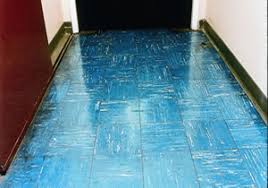
The Telltale Signs
If the tiles are small, typically 9 inches by 9 inches, and stuck down with a thick, black, tar-like glue, there is a good chance they are asbestos vinyl tiles. Both the tile itself and the black glue beneath it usually contain asbestos, so both need to be considered, not just the visible tile.
Bitumen Adhesive
Fitters often laid the tiles on a bitumen adhesive that also contained chrysotile. This black adhesive is tough to remove and flooring fitters very often simply leave it in place when re-covering a floor, rather than stripping it back. This means it is not uncommon for modern flooring products to return a positive asbestos test result, not because the new flooring itself contains asbestos, but because of the old bitumen adhesive still bonded to the subfloor beneath it.

Replacing old flooring or lifting tiles as part of a renovation?
We are happy to give advice over the phone at no charge. No sales pressure – just straightforward guidance from qualified surveyors.
Is It Dangerous?
You can walk on asbestos vinyl floor tiles, mop them, and live with them underfoot for decades without any issue. The fibres are trapped within the vinyl itself, so an intact, undisturbed floor poses no meaningful risk.
However, the danger arises if someone sands, grinds, cuts or forcefully lifts the tiles, all of which can break up the vinyl and release the fibres bound inside it. In particular, sanding down old flooring to prepare for a new surface is a common way people disturb these fibres without realising.
Where They’re Found
We find asbestos vinyl floor tiles extensively in schools, offices and any area that would originally have had high foot traffic, such as kitchens and hallways in both commercial and residential properties.
What to Do If You Have Them
If your existing vinyl tiles are in good condition and undisturbed, the safest option is often to leave them in place, or to lay new flooring directly over the top rather than lifting them. If removal or lifting is unavoidable, for example as part of a full refurbishment, this generally counts as non-licensed work under the Control of Asbestos Regulations 2012, but it still requires a competent person, the correct PPE, and proper wetting-down procedures to prevent fibre release. Therefore, testing the tiles and the adhesive beneath them at a UKAS-accredited laboratory will confirm exactly what you are dealing with before any work begins.
Asbestos Vinyl Floor Tiles – Frequently Asked Questions
Can I lay new flooring over old vinyl tiles?
Usually, yes. Covering the old floor with new vinyl, laminate or a plywood overlay is often the safest option, because it leaves the tiles undisturbed. However, do not sand, grind or scrape the old tiles to level them first.
Can I remove asbestos floor tiles myself?
Removing them is normally non-licensed work, but it still needs care. You should lift tiles whole where possible, keep them damp and follow HSE Asbestos Essentials guidance. In practice, many people prefer to use a competent contractor.
Does the black adhesive contain asbestos too?
Very often, yes. The black bitumen adhesive used under older tiles frequently contains white asbestos. As a result, it is important to test the adhesive as well as the tiles, especially if newer flooring has been laid on top.
How do I know if my floor tiles contain asbestos?
Small 9 inch square tiles laid before the mid-1980s are the most likely to contain it, particularly if they sit on black adhesive. However, the only way to know for certain whether you have asbestos vinyl floor tiles is to have a sample tested at a UKAS-accredited laboratory.
Do I need a survey before a kitchen or bathroom refit?
If the property was built before 2000 and the work will lift floors, yes. A refurbishment survey of the areas affected will tell your fitter exactly what is there. Our guide to an asbestos survey before a kitchen refit explains more.
Get in touch with HSG Surveys today
Free advice. No-obligation quotes. BOHS qualified surveyors. UKAS-accredited laboratory testing.